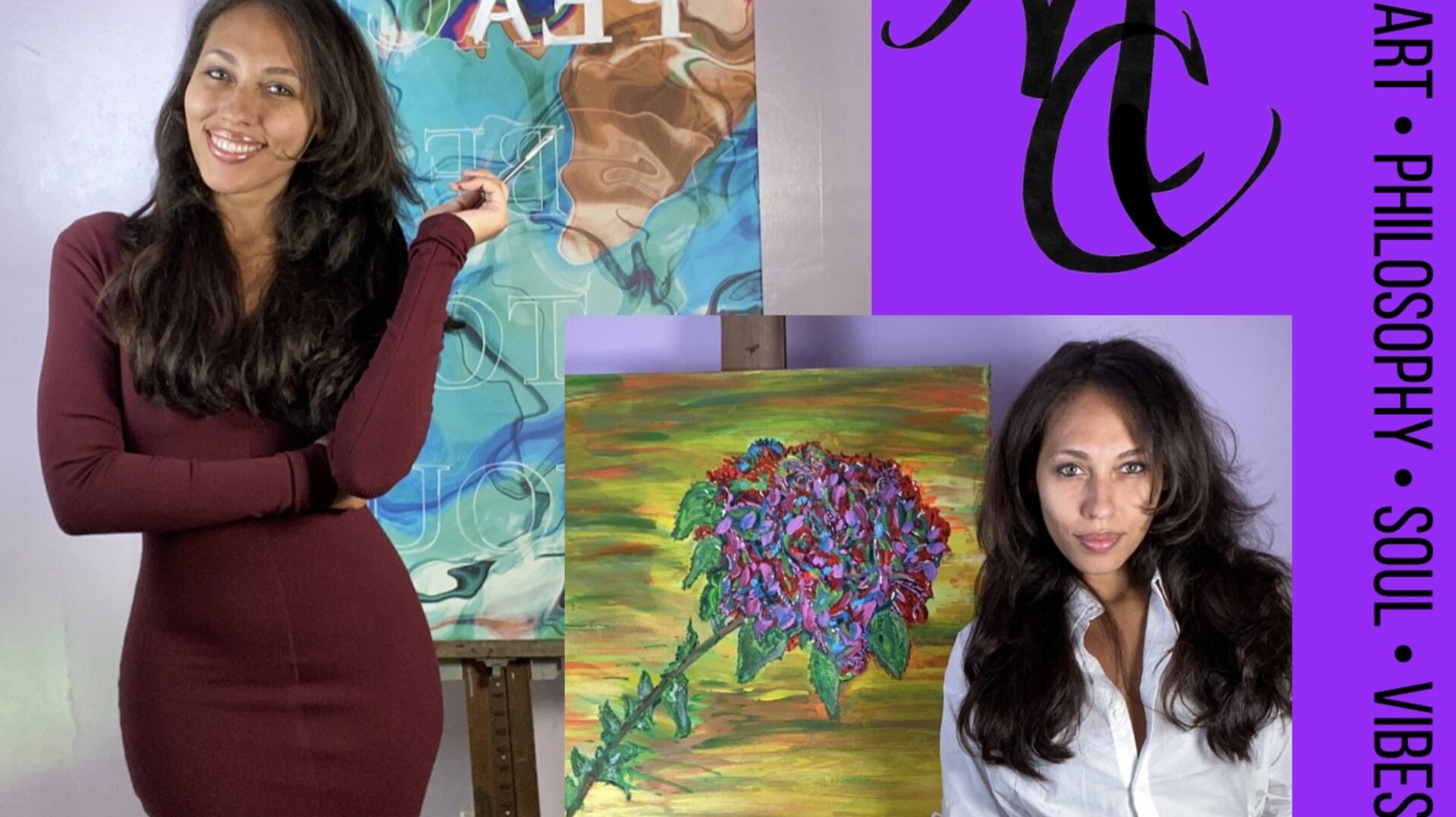
THE SOUL SOCIETY

THE SOUL SOCIETY: On Owning a Corner of the Internet, Protecting the Creative Soul, and Remaining Wild

noelclark.com has always been my open journal.

Since 2010, I have had a place on the internet where anyone could wander in and read about my dad John Clark, my life, my questions, my grief, my joy, and whatever happened to be stirring in my heart that week. There were never advertisements flashing in the margins. No pop-ups interrupting your thoughts. 

Most people found it because I shared a post, someone passed it along, or they simply stumbled upon it the way you stumble into a quiet bookstore tucked down a side street.

It felt less like a website and more like an open journal.

That’s exactly how I wanted it.

That freedom shaped the way I wrote. I could begin with something happening in my own life and follow the thought wherever it led. A personal memory could open into music, history, science, God, nature, grief, or the hidden patterns connecting one part of life to another. The writing had room to wildly wander rather than fit into a box the algorithm was pushing.

I never did find myself catering to the demands of the algorithm. I did not build my creative life around trends, viral sounds, carefully timed posts, or whatever version of myself a platform might decide to reward at the moment. That entire process felt too much like a vacuum,  pulling the soul out of creativity by telling artists how often to appear, how quickly they should make their point, and what work deserved to be seen.

Creative work began to be discussed as something to optimize. There were instructions for the hook, the thumbnail, the caption, the length, the trending sounds and music, the posting schedule, and the number of seconds available to earn someone’s attention before they disappeared into the next piece of content.

I understood the strategy, yet very little of it aligned with my spirit.

An open journal asks something entirely different. It asks nothing of me except honesty. Here, I don’t wonder whether a thought will disappear because it wandered outside someone else’s terms of service. My thoughts rarely arrive as neat, instantly consumable packages. They tend to gather slowly through observation, memory, research, conversation, prayer, music, and the odd connections my mind makes between seemingly unrelated things. Here, I can simply think, freely write, wildly wonder.

There is a particular freedom in carving out and owning a space on the ‘net, especially now that so much of our creative work is built on rented land. We pour years into platforms whose rules can change overnight, gather audiences inside structures we do not own, and gradually shape our gifts around systems we had no part in designing. Those platforms can remain places I visit, share, and connect with people, while this open journal remains home.

That belief lives at the heart of the Soul Society here at noelclark.com, a movement rooted in soul over ego, connection over perfection, and truth over performance.

And maybe that’s why I keep returning to the wilderness, where life runs wild in a harmony keen observers understand. The regal deer move through the forest without curating themselves for an audience, the birds continue their songs even when someone below is sleeping through them, and the forest moves through seasons without wondering whether enough creatures approved of the change.

Nature is gloriously unconcerned with applause.

I think people like that have always existed. The ones who choose soul over ego. The wildcards of the Soul Society.

Welcome home, Wildcards…

Welcome home.

THE FOREST SYMPHONY

THE FOREST SYMPHONY: Trees, Veins, and the Math God Hid in Both

On an unusually warm winter night in December 2024, we brought our daughter’s little piano out into the yard, and beneath a whole canopy of stars, she played. She was only sixteen months old, but her love for this world was already so plain: the gardening, the music, the stargazing. It is such a gift to watch.

Later that night, I returned to my laptop and notebook to look through the photographs I had taken. There was little Dallas, with a Marley cameo, the two of them looking like the coolest duo alive, playing a set beneath the stars.

Dallas is almost three now.

And our dear, sweet Marley transitioned to Heaven on Christmas Day of this year.

Our forest has witnessed nights filled with music, slow walks around the yard, and the quiet loneliness that began walking beside us after Marley went to Heaven. Even now, I still find myself expecting to see him emerge from between the trees, sixteen and a half years of faithful companionship taught my heart to expect him always by my side.

Maybe especially now, I find nature comforting.

When I titled my book Return to Nature, I did so because, to me, returning to nature has always been a return to God. His artwork. His fingerprints. His signature. The more closely I look, the more impossible it becomes to separate the Creator from His creation. I find His signature tucked into every corner of the natural world, and knowing He has divinely connected all of it makes everything feel a little bit like magic.

How blessed am I to have walked sixteen and a half years of my life beside Marley? How blessed is my whole family that we were given all this time to love one another at all?

It astonishes me when I think about the sheer improbability of being here, in this exact moment, and about how quietly, thoroughly interconnected we all are. Nature is not separate from us; it is within us. A tapestry of fragments woven together in a way only He could.

Consider this.

The mathematics that allow a tree to gather sunlight are astonishingly similar to the mathematics that deliver oxygen throughout your own body. One stretches toward light. The other carries life to every waiting cell. They could hardly appear more different, yet beneath them both lies the same elegant architecture, quietly repeating itself, as though the Creator found something so beautiful, so efficient, so complete that He chose to write it into creation again and again until the pattern became impossible to miss.

I will absolutely be teaching my daughter that math and science are their own kind of magic.

During our nature walks, Dallas picks up little treasures and collects them in a container she calls her “magic potions.” Her eyes are always scanning, always gathering, always questioning the world around her.

“Mom, where does the chipmunk live?”

“Mom, what do deer eat?”

“Look, Mom, a bird in the tree!”

These are the kinds of moments I love sharing with her during our walks through the woods. We stop often. We look closely.

“See how the trunk becomes limbs? The limbs become branches. The branches become twigs.”

The longer we linger, the more a tree begins to reveal that it isn’t growing at random at all. The same pattern repeats itself again and again until what first seemed ordinary begins to feel like a language. Mathematicians call those repeating patterns fractals.

And once you learn its language, you begin recognizing its handwriting everywhere.

The same branching design quietly unfolds inside your own body. Your aorta gives way to arteries, the arteries to smaller vessels, until life reaches even the tiniest corners of you. One gathers light. The other delivers life. Different purposes, yet the same elegant geometry quietly unfolding, repeating itself with such faithfulness that it begins to feel less like coincidence and more like a signature.

God, it seems, wrote this one design across the whole of creation.

And the genius of it is efficiency. A fractal is how nature covers the most space with the least material, how a tree fills the sky and how your blood fills your body, both reaching everywhere while wasting almost nothing. It is as though nature asked itself, once, “How do I make this both beautiful and unbelievably functional?” and then answered in trees and rivers and lungs and lightning and the veins of a single fallen leaf.

God is, quite simply, amazing.

Creation has a way of returning to its lessons.

It is now July 2026. Hundreds of wildfires burning across Canada have sent smoke drifting thousands of miles across North America, turning familiar blue skies hazy and tinting sunsets deep shades of copper. Air quality alerts have stretched far beyond the fires themselves, reaching communities that never saw a single flame, yet still found themselves breathing its consequences.

As I tried explaining to Dallas why we couldn’t go outside, she asked where Canada was.

I realized I was struggling with the same thing she was.

How could something so far away become something we could smell?

Something we could breathe?

I will teach her the geography.

But honestly, even I struggle to fathom how something burning so far away can find its way into our own backyard.

While reading about the tiny PM₂.₅ particles carried in the wildfire smoke, I stumbled upon a description that instantly carried me back to that warm winter evening years earlier. Scientists often compare our lungs to an upside-down tree. The windpipe becomes branches. Those branches become smaller branches still until they end in millions of tiny air sacs where oxygen quietly meets the bloodstream.

Even the way we breathe is a tree growing inside us.

And the very architecture that allows us to receive the breath of life is what leaves those delicate spaces vulnerable to the smallest intruders.

Creation has never been a collection of separate things living side by side. It is a living relationship. Trees, lungs, rivers, blood vessels, lightning, neurons, even the galaxies stretching beyond what our eyes can see, all branch according to the same quiet wisdom. Different stories. Different scales. The same Author. What happens to one part of creation has a way of traveling quietly through the rest.

I think back to that warm winter night. I was not thinking about any of this. I was simply watching my daughter’s small hands find the keys beneath a sky full of stars, feeling the quiet magic of it, the branching trees above her, the branching galaxies above them, the branching vessels carrying the rhythm of her own small heart, all of it the same design, all of it His.

A melody of magic, tuned to the frequency of love.

This land is not only for those of us here in this lifetime. It is for all things intricately connected, past, present, and future.

In Scripture, breath is never just oxygen.

It is life.

Perhaps that’s why I keep returning to the image of my daughter beneath the stars, her tiny hands finding the keys while the trees swayed gently overhead. Before there was melody, there was breath. Before there was song, there was life. Perhaps creation has been singing that truth all along.

May the lives we live revel in the magic of tiny movements and always remember that we are connected in far more ways than we could ever fully know.

HRV: The Rhythm BETWEEN The Beats

Have you ever noticed that some of the most important things in life are measured not by constancy, but by variation?

Music without pauses is just noise.

Seasons that never change would leave the earth barren.

Conversation without listening becomes a monologue.

Even our hearts were never designed to beat with perfect precision.

That tiny variation between one heartbeat and the next is called Heart Rate Variability, or HRV. Despite its name, HRV isn’t how fast your heart beats. It’s the subtle difference in timing between each heartbeat, a quiet rhythm your nervous system has been conducting long before most of us ever knew it had a name.

That surprises many people.

Most of us imagine a healthy heart beating like a perfectly wound clock.

Lub-dub.

Lub-dub.

Lub-dub.

But a healthy heart isn’t a metronome.

It listens.

With every breath you take, every step you walk, every challenge you encounter, and every moment of rest you allow yourself, your nervous system is making thousands of tiny adjustments. Those adjustments subtly change the space between one heartbeat and the next.

Counterintuitively, that flexibility is often a sign of resilience.

A higher HRV generally reflects a nervous system that can adapt. It moves between effort and recovery with greater ease. A lower HRV can accompany illness, chronic stress, poor sleep, overtraining, or other forms of strain. Neither number defines your health by itself. It is simply one conversation your body is having, and HRV allows us to overhear a small part of it.

That is why trends matter far more than today’s score.

One restless night.

A hard workout.

A difficult conversation.

Dehydration.

Alcohol.

Travel.

An approaching illness.

Even excitement.

Any of these can influence your HRV.

The goal isn’t to chase a perfect number, it’s to become a better listener.

I like to think of HRV as listening to the conductor rather than the musicians. Your heart, lungs, nervous system, hormones, immune system, even your thoughts are all playing their own instruments. HRV offers a small glimpse of how well they’re playing together.

That makes it surprisingly practical.

If your HRV has been running lower than usual for several days, your body may be asking for recovery instead of another demand. Perhaps that means an easier workout. Perhaps it means a slower morning. More sleep. Prayer. A walk through the woods. A conversation with someone who brings you peace. Sometimes the healthiest thing we can do is stop trying to push harder and begin paying closer attention.

HRV can also become one more clue about how you’re sleeping, recovering from exercise, or responding to stress. Like every good measurement, it doesn’t tell the whole story. It simply adds another piece to the puzzle.

We often mistake consistency for health, but nature rarely works that way.

The healthiest forests change with the seasons.

The healthiest rivers rise and fall.

Our lungs expand and release.

Day becomes night.

Even a healthy heart leaves tiny spaces between its beats.

Perhaps that is one more reminder that life was never designed to be rigid. The Creator built adaptability into creation itself.

Sometimes health isn’t found in keeping perfect time.

Sometimes it is found in learning to move gracefully with the rhythm we’ve been given.

#15

As I open up my 2024 blog, it is with a great sense of honor and pride that I begin here.

This past Friday, Milby High School in Houston, TX retired Chris’ #15 jersey.

Chris was a former Converse All-American and distinguished All-State and All-Greater Houston selection, and made a significant impact on his school. I love the praise his former coach had for the young man Chris was, as I and Dallas get to experience the great man he has grown into, thanks in part, to the guidance of his wonderful high school coach.

Dallas is so proud of her daddy, and cannot wait to go to Houston and see his jersey hanging in the rafters. Legacy!

The stage is set for greatness.🏀✨

World IBD Day 2023

Happy World IBD Day! Today, we raise awareness for Inflammatory Bowel Disease (IBD), which includes the conditions: Crohn’s disease and ulcerative colitis (UC).

During my severe UC flare of 2020-2021, I underwent a transformative journey of self-discovery, exploring the incredible healing potential of nature.

The intensity of my UC flare emphasized the significance of “making my highs high,” and recognizing that “Life Is A Magical Adventure” mantras I often leaned on during that challenging time. It became clear to me that in order to heal and become a stronger, thriving individual despite chronic illness, I needed to prioritize myself. And so, I did. I embraced self-love, personal growth, and healing practices I discovered that are natural gifts — and I express gratitude for these gifts and blessings every, single day.

While I have always cherished life’s small moments, my UC flare heightened my appreciation and presence in each passing second.

I am so grateful to God for blessing me with, and blessing, my struggle. I learned so much about myself and the magic of nature through that healing journey with UC. I am a stronger and more healed version of myself, walking into new journey’s and blessings with my head and faith held high. In navigating this beautiful, blessed journey of life, my faith remains steadfast in God’s guidance.

I’m excited to share that in 2021, I released a book titled “Return to Nature.” This book chronicles my journey through traumatic loss and chronic illness, highlighting how the transformative power of nature played a pivotal role in my healing process.

In “Return to Nature,” I delve into my personal experiences with grief, anxiety, and autoimmunity, exploring the profound impact stress has on our well-being, both in sickness and in healing. The book provides invaluable insights and practical tools for managing stress, allowing us to lead healthier and more harmonious lives. It combines personal anecdotes, philosophical musings, and scientific knowledge to guide readers on their own healing path. It is my believe that by sharing personal testimony, we can touch the life of another and from that point — healing spreads in ways we cannot even imagine.

“Return to Nature” encourages us to embrace and navigate all emotions, even those that feel heavy or negative, as a means of healing and finding clarity, focus, and resilience. In a world filled with curated images and false realities, this book invites you to embrace authenticity and extend grace to yourself on the journey towards self-awareness and healing.

As an added bonus, “Return to Nature” includes a guided healing journal spanning over 25 pages, empowering readers to personalize their own healing journey.

On this World IBD Day, let us celebrate the strength and resilience of individuals living with IBD and support ongoing research and awareness efforts. May we all find healing, self-discovery, and a deeper connection to nature in our own lives.

Return To Nature

Focusing On The Free In Your Free-Fall

The impediment to action advances action. What stands in the way becomes the way.” – Marcus Aurelius

The impediment to action advances action” suggests that obstacles or difficulties that we view as setbacks to taking action can actually help us progress if we only shift our perspective. When we encounter challenges, they can serve as catalysts for growth and development if we are open to viewing them as such. Instead of viewing obstacles as barriers that serve to only prevent us from progressing forward and forming new habits, we can reframe our thoughts to view these setbacks as opportunities to learn, adapt, and find alternative paths towards accomplishing our goals.

What stands in the way becomes the way” emphasizes the idea that the very thing that appears to be blocking our progress can, in fact, be transformed into the means to actually achieve our objectives. By reframing our thoughts, obstacles can be viewed and accepted as a necessary part of the process, and when we see them as opportunities for growth, we can find creative solutions, develop resilience, and overcome difficulties to establish the habits that will lead to the growth we are gifted through overcoming.

This quote is an excellent reminder to: train your mind. Written by one of my personal favorite philosophers, Marcus Aurelius, it encourages individuals to approach obstacles with a positive perspective, viewing them as stepping stones rather than roadblocks. By embracing challenges and viewing them as integral to the process, we can cultivate a greater sense of determination, perseverance, and adaptability, leading to more successful habit formation.

Conscious habit formation is crucial to life. The things that regularly account for your time are the habits that make up your life. Where are your habits leading you?

The Peace From Trees

There is something so joyful about the little routine I’ve built around my bird feeders.

I get so excited watching the birds dart in and out. Some days the squirrels inevitably try to steal the show, while my deer patiently wait beneath the feeders for whatever the birds leave behind.

Eventually my attention drifts upward.

I look into the trees, marveling at them the way I imagine a curious child might. Their branches stretch confidently toward the sky while their leaves dance with every passing breeze, each movement subtly changing the song they seem to be playing. Before I realize it, I’ve started swaying too, almost as though the breeze has invited me into the dance.

The wind moving through the leaves.

A woodpecker somewhere beyond the trees.

The scent of damp earth after rain.

Sunlight filtering through the branches in a way no stained-glass window could ever quite imitate.

Without trying, I become present.

There is something about trees that has always lifted something inside me. They have a way of quieting the noise in my mind while awakening something in my spirit.

Now I find myself wondering which birds will visit today, whether my deer came by overnight, or whether the woodpecker is somewhere nearby announcing himself from a tree I still haven’t managed to find. Somewhere along the way, these ordinary little moments became something I greatly look forward to each day.

Dallas has begun looking for them with me. She’ll point toward the feeder before I even notice who’s arrived, as though she’s reminding me to pay attention. I love that these quiet little moments have become part of our days together. My hope is that long after she’s grown, she’ll remember slowing down long enough to notice the birds, the squirrels, the deer, and the trees. I hope she’ll always know that wonder is worth making time for.

Trees, like a good friend, are good to be around.

Research suggests there is good reason for that feeling. Spending time in nature has been associated with lower stress levels, improved focus, greater creativity, and even increased empathy. Simply being among trees has been shown to lower blood pressure and heart rate, gently reminding our bodies of a rhythm they seem to recognize.

After all, we were never designed to spend every waking hour beneath fluorescent lights, staring at glowing rectangles. Long before there were offices, highways, and smartphones, there were forests. There were rivers. There were birds greeting the morning before alarm clocks ever existed.

Maybe our bodies remember something our schedules have forgotten.

The next time life begins to feel impossibly loud, consider stepping outside before reaching for another solution.

You may discover that the trees have been quietly preaching peace all along.

How to manage episodic acute stress

Last, but not least, we are going to talk about episodic acute stress.

Episodic acute stress is like when your boss gives you a million tasks to do, and your partner is nagging you about something petty, and to top it off, your internet connection is going so slowly that nothing is loading — not even noelclark.com 🙂 All of this stress can make you feel like you’re about to explode. It can also make you super tired, so you’re basically a very overwhelmed, ticked off walking zombie.

Tackle episodic acute stress head-on with these 5 practical tips for effectively managing your stress levels. From taking a breather to trying out mindfulness, these tips will have you finding your sense of calm sooner.